Fox Daisy Color Font: Whimsical Typography for Modern Design
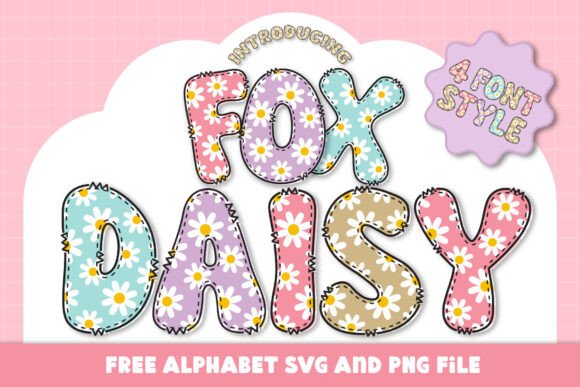
There's a moment in every design project where you realize the typography needs to do more than just convey words—it needs to tell a story. If you've been searching for a typeface that brings genuine personality and visual warmth to your work, the Fox Daisy Color Font might be exactly what your creative toolkit has been missing. This isn't your standard black-and-white typeface; it's a fully realized color font that integrates delicate daisy patterns directly into bold letterforms, offering four distinct color palettes that can transform ordinary text into a design feature.
What Makes This Typeface Stand Out
Color fonts represent a fascinating evolution in typography, and Fox Daisy demonstrates exactly why they've gained such traction among designers and creative professionals. Each letter in this font carries intricate daisy illustrations woven into its structure, creating a texture and visual depth that traditional fonts simply cannot achieve. The four included variations—Pink, Mint, Purple, and Beige—each bring a different mood to the table, giving you flexibility across diverse projects without needing to source multiple typefaces.
The Fox Daisy Pink variation pairs a sweet, cheerful background with crisp white daisies, making it ideal for projects targeting younger audiences or brands with a playful identity. Meanwhile, Fox Daisy Mint offers a more refreshing, calming aesthetic that works beautifully for wellness brands, spring-themed campaigns, or any project that needs a gentle pop of color without overwhelming the viewer. The Fox Daisy Purple option leans into dreamy, lavender tones that feel both sophisticated and whimsical—perfect for beauty brands, boutique packaging, or editorial layouts that want to feel elevated yet approachable. Finally, Fox Daisy Beige provides a neutral, grounded option with a cozy daisy pattern that suits minimalist branding, rustic-themed designs, or projects where you want personality without excessive color saturation.
Practical Applications Across Design Disciplines
The versatility of a display font like Fox Daisy becomes apparent when you start mapping it to real-world projects. Consider how it functions across different contexts:
- Branding and Logo Design: A small bakery, flower shop, or children's clothing line could use Fox Daisy as a primary logotype to immediately communicate warmth and approachability. The built-in color and pattern eliminate the need for additional graphic elements, streamlining the design process while maintaining visual impact.
- Packaging Design: Product labels for artisan goods, cosmetics, or specialty foods benefit enormously from typography that carries its own visual weight. Fox Daisy's color variations allow you to match packaging to existing brand palettes or create seasonal limited editions with minimal effort.
- Social Media Graphics: In crowded feeds where every post competes for attention, a distinctive font can be the difference between scrolling past and stopping to engage. Fox Daisy works exceptionally well for Instagram stories, Pinterest pins, Facebook headers, and promotional graphics that need to feel fresh and inviting.
- Invitations and Greeting Cards: Wedding invitations, baby shower announcements, birthday cards, and holiday greetings all benefit from typography that feels celebratory and personal. The daisy pattern adds a handcrafted quality that resonates with recipients.
- Posters and Event Materials: Farmers' markets, garden parties, spring festivals, and community events can use Fox Daisy to create promotional materials that feel cohesive and thematic without relying on stock imagery.
- Merchandise and Print-on-Demand: Tote bags, mugs, stickers, and apparel featuring Fox Daisy typography can appeal to audiences who appreciate whimsical, nature-inspired design. The font's built-in color makes it particularly suitable for products where simplicity translates to production efficiency.
- Blog Headers and Website Accents: Lifestyle bloggers, wellness coaches, and creative entrepreneurs can incorporate Fox Daisy into website banners, section headers, or featured graphics to establish a consistent visual voice that feels distinctive and memorable.
- Editorial Layouts and Digital Products: Magazine spreads, e-book covers, online course graphics, and downloadable planners can all leverage this font to create a polished, professional appearance that still feels approachable and creative.
Matching Typography to Your Project Goals
Choosing the right font style goes beyond personal preference—it requires thinking about what your audience expects and how typography influences perception. A display font like Fox Daisy works best in contexts where you need headlines, titles, or short bursts of text to command attention. It's not designed for body copy or lengthy paragraphs, and that's perfectly fine. Every typeface serves a specific role in a well-constructed design system.
When incorporating Fox Daisy into a project, consider pairing it with a clean sans serif font for body text. A modern, geometric sans serif will provide the readability that Fox Daisy intentionally trades for visual personality. Alternatively, if your brand skews more traditional or editorial, a classic serif font can create an interesting contrast that feels both contemporary and grounded. The key is testing font pairings in context—set your headline in Fox Daisy, your subheadings in a complementary typeface, and your body copy in something highly legible at smaller sizes.
Readability considerations matter even with decorative fonts. Fox Daisy's bold letterforms maintain reasonable legibility at larger sizes, but you'll want to avoid using it for critical information that needs to be read quickly, such as pricing details, legal disclaimers, or navigation elements. Instead, reserve it for moments where visual impact takes priority over rapid comprehension.
Technical Setup and Compatibility
As an OpenType full-color (SVG) font, Fox Daisy installs just like any standard .otf file. Mac users can add it through FontBook, while Windows users can install it via their preferred font manager or through the Control Panel's font settings. One important detail worth noting: color fonts will display as standard black text in programs that don't support SVG font rendering. This means you'll see the letterforms but lose the daisy patterns and color variations in incompatible software.
For full functionality, ensure you're working in compatible applications. Adobe Photoshop has supported color fonts since CC 2017, Illustrator since CC 2018, and InDesign since CC 2019. Outside the Adobe ecosystem, you can use Fox Daisy in Inkscape, QuarkXPress (2018 and later), Pixelmator, Sketch, Affinity Designer (macOS 10.14 Mojave and later), and Paint.NET on Windows. Checking your software version before purchasing any premium font with color capabilities saves frustration and ensures you get the full visual experience you're paying for.
Building Visual Consistency and Brand Recognition
One of the most valuable aspects of investing in a distinctive creative font like Fox Daisy is how it contributes to brand recognition over time. When your audience repeatedly encounters the same typographic style across your packaging, social media, website, and printed materials, that visual consistency reinforces memory and trust. The daisy motif becomes synonymous with your brand identity, creating an association that extends beyond the words themselves.
For small business owners and entrepreneurs, this kind of visual shorthand is incredibly powerful. A design asset that works across multiple touchpoints—your Instagram posts, your product labels, your thank-you cards, your email headers—creates cohesion without requiring a full design team. Fox Daisy's four color variations give you enough range to keep things interesting while maintaining that core visual thread.
Think about how you might rotate the Pink variation for spring promotions, switch to Beige for autumn campaigns, or use Mint for summer product launches. This seasonal flexibility within a single typeface family keeps your brand feeling dynamic while preserving the recognizable daisy pattern that audiences come to associate with your business.
Final Thoughts on Integrating Fox Daisy Into Your Workflow
Before committing any display font to a major project, take time to experiment. Set sample text in each of the four color variations. Test them against your existing brand colors. Print a sample at the size you'll actually use to verify that the daisy details read clearly. Create mockups of your intended applications—whether that's a business card, a social media post, or a product label—and evaluate how the font performs in context rather than in isolation.
Also consider your commercial licensing needs. If you're using Fox Daisy for client work, merchandise, or products you intend to sell, verify that your license covers those specific use cases. Most commercial font licenses distinguish between personal and commercial use, and understanding those terms upfront protects both you and your clients.
Fox Daisy occupies a specific niche in the typography landscape—it's not trying to be everything to everyone, and that's precisely its strength. For designers, marketers, and creative professionals who need a typeface that brings genuine warmth, personality, and visual interest to short-form text, it offers a compelling combination of aesthetic appeal and practical versatility. The daisy pattern isn't just decorative; it's a design decision that communicates approachability, nature-inspired beauty, and a willingness to embrace playful sophistication. When that message aligns with your brand or project, Fox Daisy becomes more than just a font—it becomes a strategic visual asset.